1-on-1 Muscle Weight Gain Program
Strength Training in Naperville
What’s the best workout routine for gaining muscle? The one that’s built for you.
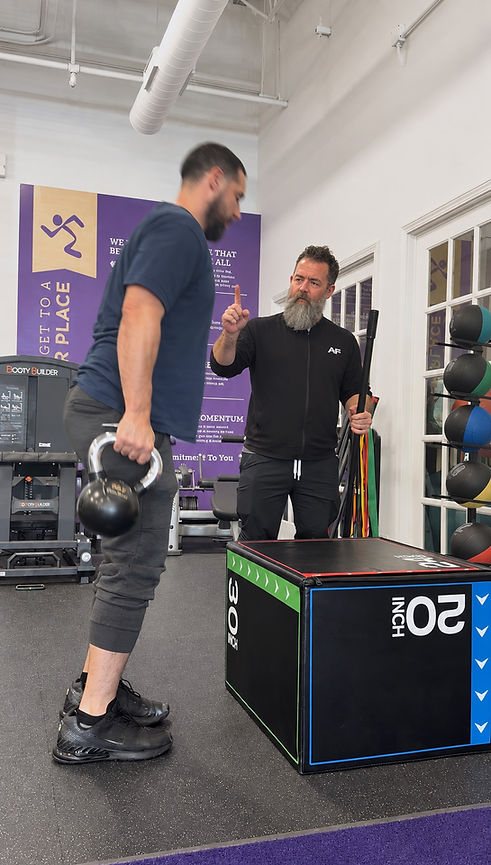
At Starck Fitness, you won’t walk into the gym and be handed the same workout routine as everyone else. Your 1-on-1 personal trainer starts with an assessment of your strength training goals, current mobility, workout experience and physical limitations. Using a physical therapy-informed lens, we meet you where you are, teach proper form and progress your muscle gain plan as you get stronger.
-
Learn healthy weight by building muscle
-
Lose fat while building strength
-
Learn which gym exercises are right for you
-
Improve your form and lifting technique
-
Work around mobility or physical limitations
-
Get back into a fitness routine safely
-
Progress to heavier weights and more advanced workouts
Proven Strength Training Experience. Trusted Credentials.
Our team brings over 100 years of combined strength training experience to Starck Fitness. That experience is backed by credentials and specialized muscle gain training through respected fitness organizations including NASM, ISSA, and W.I.T.S., with expertise in strength training, corrective exercise, performance enhancement, proper form, and individualized program design. The goal is simple: build strength with a program designed around your body, abilities, experience, and goals.


%20Performance%20Enhancement%20Specialist%20(PES)%20certif.png)




Strength Assessment Before Weights
Am I Going to Get Hurt?
If you’re new to strength training, returning after time away, or concerned about a previous injury, you shouldn’t be expected to walk into the gym and immediately start lifting heavy weights. At Starck Fitness, strength training starts with an assessment so we can understand your goals, training history, current abilities, movement, and any injuries or limitations that may affect how you train.
Before building your program, we talk with you about where you’re starting and assess how you move. That may include balance, mobility, stability, and foundational movement patterns. Your personal trainer can then choose exercises, resistance, and progressions that make sense for your body and your starting point, rather than putting you into a generic strength training workout.
If you’re returning to exercise after an injury or dealing with a more complex limitation, we take that into account too. Personal training does not replace physical therapy or medical care. When something falls outside the scope of personal training, we can help determine when additional guidance from a qualified healthcare professional may be appropriate before progressing your strength training.
Then we build from there. Beginners may start with controlled foundational movements before progressing to heavier resistance. As your technique, strength, balance, and confidence improve, your trainer adjusts the program with you. The goal is not to see how much you can lift on day one. It’s to build strength you can continue progressing over time.
The Best Workout Routines Start with a Personal Trainer
At Starck Fitness, we believe there is no “one best workout” for everybody. The best workout routine is one customized specifically for you: your weight gain (or loss) goals, your medical history, your joints, your schedule. We meet you where you’re at, fix the form first, then safely crank up the routine difficulty as your body is ready for it. Crawl, walk, run. Not the other way around.
Upper Body Strength Exercises
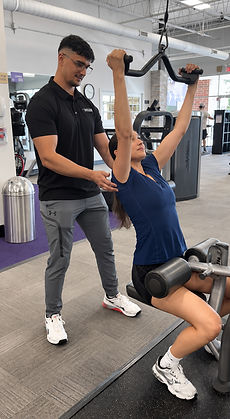
Build upper-body strength with exercises matched to how your body moves. Your strength trainer looks at how your shoulders, elbows and upper back move, then builds a plan to strengthen your traps, biceps, chest, shoulders, triceps, lats, forearms and upper back. You’ll learn proper form first, including how the joint should move and what the rep should feel like. Then we gradually increase resistance as your movement, form and strength improve.
Lower Body Strength Exercises
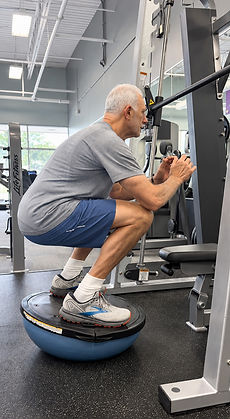
We don’t jump straight into squats and lunges with heavy weights. We start by seeing how you actually bend, then match lower-body exercises to your calves, glutes, thighs and legs based on your current strength, balance and mobility. Once the foundation is there, we add weight and resistance over time. No ego powerlifting. No cookie-cutter “leg day.” Just smart strength progression that builds muscle through your knees, hips and ankles without skipping phases.
Core Strengthening Exercises

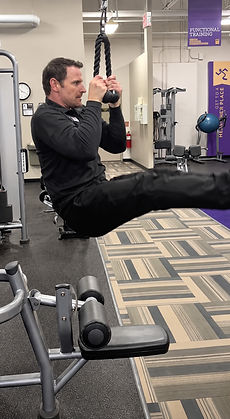
Endless crunches aren’t the answer to losing belly fat. Your core includes your lower back, abs and legs, working together to help you stay stable while you lift weight and move. We pick core strengthening exercises based on your posture, range of motion and control, not some generic “ab workout.” Better stability and control give you a stronger foundation for the rest of your strength training.
Exercises for Endurance
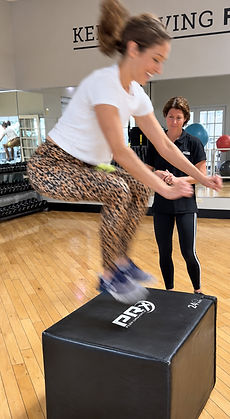
If your cardiovascular system isn’t ready, your body isn’t ready. That’s why we ease you in and build you up instead of beating you up on a treadmill on day one. Depending on your fitness goals and starting point, your strength training plan can include HIIT, aerobics, stretches, endurance workouts, cardio and resistance training. We dial in the right type and intensity of exercise at the right time, then progress it as your fitness improves.
“The coaches are incredibly knowledgeable about strength training, technique, injury prevention, and long-term progress.”
- Dana, 5-star Google review
Gaining More Than Muscle
Training for Longevity, Injury Recovery and Mobility
For Starck Fitness, strength training is not just “lifting more weight” or chasing a certain look. It’s about how your body holds up in real life like getting off the floor, carrying groceries, playing with your kids or grandkids, getting through a workday without your back, knees, or shoulders screaming at you. A smart strength training program doesn’t just hit muscles. It works on strength, balance, stability, and mobility so you move with more confidence and lower the chance that one wrong step or one bad rep sidelines you for weeks. Because when you do get hurt, it’s rarely “just one workout” that’s affected. An injury can mean:
-
Time away from work or struggling to do your normal job
-
Weeks or months away from the gym and activities you enjoy
-
Losing strength and conditioning while you’re forced to back off
-
Everyday stuff feeling harder—stairs, lifting, walking, recreational sports
-
Having to rebuild strength, stability, balance, and mobility before you trust your body again
That’s why we don’t treat strength training as “just building muscle.” Your program should prepare your body for the demands of your life, not just the exercises written on the whiteboard.
Meet Our Team
Starck Fitness Personal Trainers
Our experienced team brings together 100+ years of combined experience, specialized certifications, and expertise in strength, mobility, injury prevention, and recovery. Unlike cookie-cutter gyms, our trainers have the freedom to design fully customized workout programs around each client’s body, goals, abilities, and progress.
Mike, Personal Trainer in Naperville
Mike Starck, owner and head coach of Starck Fitness, brings decades of training experience and an Army Ranger background to his approach to personal training. He focuses on injury prevention, proper form, and fully customized workout programs, matching each client with the right trainer and ensuring their plan fits their body, goals, and abilities.
Nick, Personal Trainer in Naperville
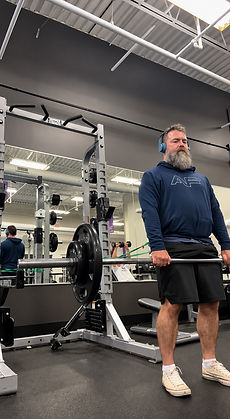
With 22+ years of experience, Nick specializes in building strength and gaining muscle with proper form and smart progression. He creates fully customized workout routines around each client’s goals, abilities, and experience, helping them safely progress from foundational movements to advanced strength training.
Lisa, Personal Trainer in Naperville

Lisa is a female personal trainer with 20+ years of experience helping clients build strength, endurance, and confidence through safe, customized training. She emphasizes proper form, smart progression, and workouts tailored to each client’s body, abilities, and goals.
Quinn, Personal Trainer in Naperville
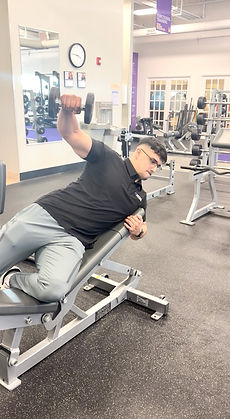
Quinn specializes in strength development, functional fitness, and muscular endurance through structured, individualized training. He builds customized workout programs around each client’s goals and abilities, helping them develop strength, confidence, and sustainable fitness habits through personalized guidance and consistent progression.
Ready to Get Matched with Your Personal Trainer?
We start by learning about your goals, training history, injuries, schedule, and how your body moves, then match you with the personal trainer whose experience and coaching style fit you best. From there, your trainer builds a fully customized workout program and adjusts it as your strength, movement, and goals progress.
Strength training progression looks different for everyone. The example below shows how a muscle gain program may progress from beginner to intermediate and advanced strength, but it is not a one-size-fits-all roadmap. Your personal trainer builds and adjusts your program around your goals, experience, current abilities, age, injury recovery, medical limitations, and schedule. You may move through these stages differently, spend more time in one stage, or follow a different path entirely.

Beginner Strength Training
The first phase isn’t about crushing workouts, it’s about meeting you where you’re at and keeping you out of the injury cycle. We start by getting to know your body: how you move, where you’re tight, what hurts, and what your day-to-day life actually looks like. From there, we focus on form, posture, breathing, balance, coordination, and core stability, often starting with warm-ups, foam rolling, and simple full‑body movements before we ever worry about how much weight is on the bar.
Instead of throwing you into a random “beginner workout,” we build a custom, full‑body program that fits your current strength, history, and goals. You’ll ease into strength training two days per week to start, practicing the fundamental movement patterns and learning to lift with proper technique. As your form becomes consistent, your confidence grows, and your body adapts, we gradually increase resistance, add complexity, and, when you’re ready, progress you toward more advanced strength work. It’s crawl, walk, run, not sprint on day one.

Intermediate Strength Training
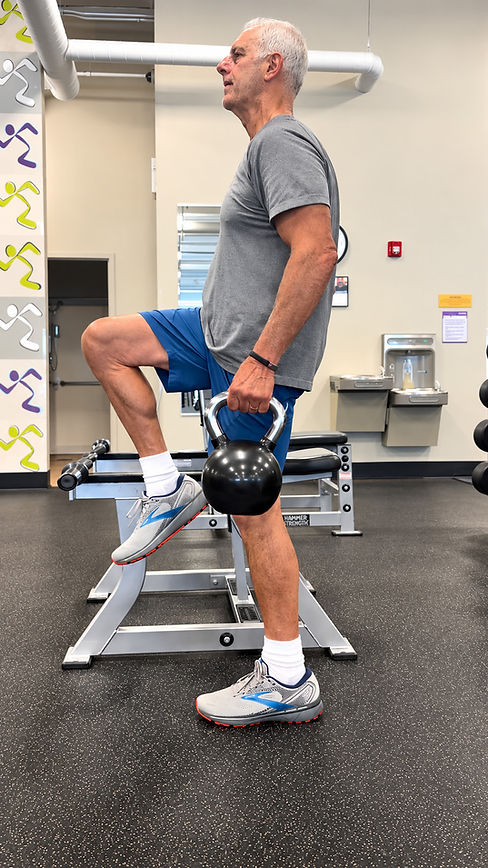
Once you’ve built a solid base and can move well consistently, we start to load the basics. That can look like heavier bench presses and rows, squat and deadlift variations, split squats, step-ups, carries, and more challenging core strengthening and stability work. We’re still prioritizing control and position in the gym first, but now we’re asking your body to do more work with good form, not just go through the motions.
At this stage, many clients move to 3+ strength sessions per week, depending on your goals, injury recovery, sleep, stress, and schedule. Muscle gain progress isn’t just about lifting bigger weights on the bar. It’s noticing that everyday mobility tasks feel easier, you can handle more training without your form falling apart, your joints feel better instead of worse, and your strength keeps trending in the right direction over time, not just for one big week.

Advanced Strength Training
At an advanced strength training level, the goal is to get stronger and more capable with powerlifting and heavier weights, not just wrecked and exhausted. By this point you’ve built the proper technique, strength, and training routine to handle more demanding work, so your program becomes much more specific to your muscle gain goals, whether that’s performance, physique, longevity, or staying ahead of injuries.
That can mean heavier weights, more advanced strength exercise variations, higher training volume, and planned waves of harder and easier weeks so you’re pushing without breaking down. Many advanced clients train 3–4 or more structured strength days per week, but frequency and intensity are still customized to your life, stress, and recovery. Progress here comes from dialing in the details, load, reps, tempo, exercise selection, and recovery, rather than just adding more weight every week.
Ready to step into strength training?
Your assessment isn’t a workout test, it’s a 60–90 minute deep dive into your fitness goals, movement, injuries, and lifestyle so we can build the right workout plan from day one. If you’re ready to stop guessing and start training with a plan, hit the button below or call (630) 219-4115 directly to schedule your assessment with a Starck Fitness coach.

Personal Training or Physical Therapy?
Dr. Joe, Physical Therapist for Injury Recovery and Longevity
Dr. Joe provides in-house medical advice and physical therapy expertise to support injury prevention, recovery, and safe strength training. For clients with complex injuries or physical limitations, he works with the Starck Fitness team to help assess concerns, guide programming, and determine when a client is ready to train safely.

Massage Therapists
Starck Fitness has two on-site massage therapists who can serve as additional resources for recovery, longevity and injury prevention. Alongside the personal training team and physical therapy resources, the message therapists give clients another option for addressing the wear and tear that can come with strength training, helping support mobility, recovery and the ability to keep training consistently over the long term. Here are Starck Fitness’s preferred on-call massage therapists, available to join a training session when additional support is needed:
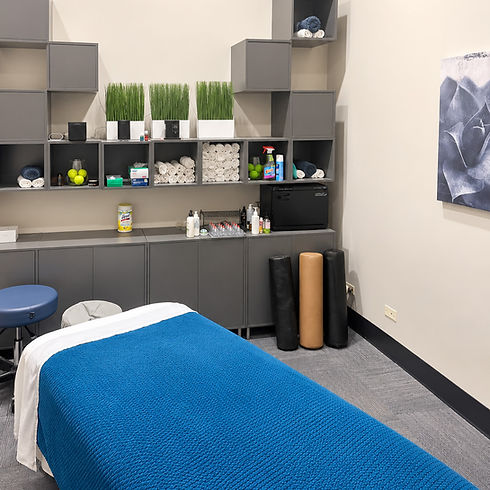
Helping Naperville clients get stronger, safer, since 2003
Highly Rated Strength & Personal Training Reviews
Starck Fitness is a top-rated strength training and weightlifting option in Naperville, Illinois, feature strong client reviews and distinct training styles.
★★★★★
“It's one of the best investments I've made in my health and fitness.”
- Dana K. | Google Review
★★★★★
“The training is professional and extremely helpful.”
- Cliff V. | Google Review
★★★★★
“The program focuses on longevity, and it's kept me strong enough to keep up with my kids and play with them for years to come.”
- Wes H. | Google Review
★★★★★
“Every workout has a purpose, and they consistently challenge me while making sure I'm training safely and effectively.”
- Dana K. | Google Review
★★★★★
“A team that truly cares about your results.”
- Wes H. | Google Review
★★★★★
“The environment is quiet, friendly, courteous.”
- Brian L. | Google Review
Frequently Asked Questions
What’s the best workout routine?
The best workout routine is the one that fits your body, your life, and your goals so well that you can actually stick with it and get stronger without getting hurt.
In practice, that means:
-
It matches your joints and history: The “best” routine for a 25‑year‑old with no injuries is not the best routine for a 52‑year‑old with a bad knee and a cranky lower back. Exercises, volume, and intensity should be built around your shoulders, hips, knees, and spine.
-
It lines up with your real schedule: A “perfect” 6‑day plan you can’t follow is worse than a 2–3 day routine you hit every week. The best workout routine is the one you can do consistently, not occasionally.
-
It trains the basics well: Push, pull, squat, hinge, and carry; plus some core and conditioning. You don’t need a circus of exercises—you need the fundamentals done with good technique and smart progressions.
-
It progresses at your pace: Weight, reps, or difficulty should go up as your strength, control, and confidence improve—not just because it’s “Week 4” on a template. If your body isn’t ready, the routine should adjust.
How to lift weights?
From Starck Fitness’ point of view, the real answer to “How do I lift weights?” is: learn to lift safely first, then worry about lifting heavy.
-
Start with how you move, not how much you lift: We look at your shoulders, hips, knees, and back under light load first. If the joints aren’t in a good position, adding more weight just adds more risk.
-
Master a few key patterns: Push, pull, squat, hinge, and carry. Think presses and rows, squats and deadlift‑style hinges, step‑ups, and loaded carries. Clean, repeatable technique on these does more for you than chasing a hundred fancy exercises.
-
Use the right weight for your body today: The right load is one you can control for solid reps without pain or your form falling apart. When that gets easier, we add weight, reps, or tempo—not all at once.
-
Control the rep, don’t let the rep control you: No bouncing, jerking, or racing through sets. Smooth, controlled movement, full range of motion your joints can handle, and strong positions at the top and bottom of each rep.
-
Respect pain and history: Old injuries, surgeries, or current pain change the exercise list. Sometimes that means using a trap bar instead of a straight bar, dumbbells instead of a barbell, or supported variations until your body can tolerate more.
-
Be consistent, not heroic: Lifting weights twice or three times a week, with good form and smart progressions, will always beat a random “go hard” day followed by two weeks off.
At Starck Fitness, “lifting weights” means putting your joints in the right position, owning the movement, and then slowly loading it over time. Do that, and strength goes up while injury risk goes down.
How to gain weight?
At Starck Fitness, the answer to “How do I gain weight?” is really: how do you gain quality weight, mostly muscle, without wrecking your joints or your health?
We’d break it down like this:
-
Start with the goal and the body in front of us: Are you underweight, just “hard to put on size,” or coming back from illness or a big layoff? What do your shoulders, hips, knees, and back look like when you move? That tells us how heavy and how often you can safely train.
-
Lift for strength and muscle, not just sweat: For most people who want to gain weight, that means focused strength training: presses, rows, squats, hinges, and other big movements you can progressively load—done with form we clean up first, then weight added over time.
-
Eat enough to actually grow: If you’re not in a calorie surplus, your body won’t add much muscle. We’ll talk about protein, total calories, and simple habits (more meals, better snacks, recovery) so your training has something to build with.
-
Protect the joints while you’re loading up: Gaining weight while your back, knees, or shoulders are irritated is a bad trade-off. We adjust exercises and volumes so you can push hard without lighting up old injuries.
-
Be consistent and patient: Real muscle and meaningful weight gain don’t happen in two weeks. With the right plan, you should feel stronger in a few weeks and see visual changes over the next few months.
In short, to gain weight the right way, you need a smart strength plan + enough food + joints that are protected while you push heavier. We build the program around your body first, then help you eat and train in a way that lets you add size without breaking yourself in the process.
What is the best workout for abs?
There isn’t one magic ab workout that’s best for everybody. The right core work depends on your spine, posture, and control. From Starck Fitness’ perspective, the “best workout for abs” is the one that makes your whole core stronger and more stable without beating up your lower back or hips, not a random list of crunches.
In practice, that looks like:
-
Build stability first, not just burn: The core’s job is to brace and protect your spine while you move. That means starting with things like dead bugs, bird dogs, planks, and simple anti‑rotation work that teach you to keep your trunk stable while your arms and legs move.
-
Pick core exercises that your back can tolerate: If you’ve got a history of back pain, disc issues, or cranky hips, endless sit‑ups and twisting crunches are usually the wrong answer. We bias more spine‑friendly work—planks, modified side planks, carries, and stability drills that strengthen without grinding your joints.
-
Make your core earn its keep in real lifts: Some of the best “ab work” happens when you’re not doing an “ab exercise” at all: squats, hinges, loaded carries, rows, presses done correctly all require your core to brace. We coach those lifts so your abs and trunk are working the whole time, not just at the end of the session.
-
Progress when your control is there: Once you own the basics, we can progress to harder variations—longer planks, more challenging anti‑rotation, heavier carries, stability ball variations, or advanced core drills—as long as your positioning and breathing stay solid.
What nutrition (foods) or diet help sore muscles?
From a Starck Fitness standpoint, the basics that help sore muscles recover are:
-
Enough protein to repair muscle (lean meats, fish, eggs, Greek yogurt, cottage cheese, nuts, beans).
-
Carbs around training to refuel (potatoes, rice, oats, fruit, whole‑grain bread).
-
Hydration + electrolytes (water, plus some sodium/potassium from things like broth, bananas, lightly salted foods).
-
Anti‑inflammatory foods to support recovery: colorful veggies, berries, olive oil, nuts, fatty fish (salmon, sardines)
Dial those in, and your body has a lot better shot at handling soreness and getting stronger between sessions. Learn more about nutrition coaching.
Do you offer at home strength training?
No, Starck Fitness focuses on in‑gym, 1‑on‑1 personal training. We may design homework and at‑home strength plans for our clients, but the coached sessions happen in a clean Naperville fitness facility.
How much does a strength training personal trainer cost?
At Starck Fitness in Naperville, 1‑on‑1 strength training personal training sessions are about $80 per 60‑minute session, with package options that can lower the effective rate for clients who train more consistently.


Ready to Gain Muscle and Strength?
Ready to get stronger with a program built around you? Talk with the Starck Fitness team about your goals and find out how one-on-one strength training in Naperville can help you build strength, gain muscle, and make progress at the right pace for you. Call (630) 219-4115 or fill out our online form to get started.